
 Sterling Silver
 24k Gold Plated
 Rose Gold
 14k Gold
 14k White Gold
 Cubic Zirconia
 Birthstone

 Leather


 Opal Jewelry


Birth Flowers by Month: All 24 Birth Month Flowers and Their Meanings
Flowers say the things we often struggle to put into words, which is why they turn up at birthdays, weddings and every milestone in between. The birth flower tradition gives each month two blooms, each with its own meaning, much like a birthstone. The list comes from European and North American custom, so here in Australia some of these flowers peak at the opposite time of year: the snowdrop is a winter bulb, while our January is all heat and long summer evenings. The meanings travel well, though, and many people now wear their bloom every day as a birth flower necklace. Below you will find all 24 birth month flowers, what each one stands for, and ideas for turning yours into a keepsake.
What is my birth flower? January: carnation and snowdrop. February: violet and primrose. March: daffodil and jonquil. April: daisy and sweet pea. May: lily of the valley and hawthorn. June: rose and honeysuckle. July: larkspur and water lily. August: gladiolus and poppy. September: aster and morning glory. October: marigold and cosmos. November: chrysanthemum and peony. December: narcissus and holly.
Jump to your month: January | February | March | April | May | June | July | August | September | October | November | December
Birth Flowers by Month Chart
| Month | Birth Flowers | Meaning |
|---|---|---|
| January | Carnation & Snowdrop | Love, devotion and hope |
| February | Violet & Primrose | Loyalty, modesty and young love |
| March | Daffodil & Jonquil | New beginnings and joy |
| April | Daisy & Sweet Pea | Innocence, purity and gratitude |
| May | Lily of the Valley & Hawthorn | Happiness, humility and hope |
| June | Rose & Honeysuckle | Love, passion and devotion |
| July | Larkspur & Water Lily | Positivity, grace and rebirth |
| August | Gladiolus & Poppy | Strength, integrity and remembrance |
| September | Aster & Morning Glory | Wisdom, faith and affection |
| October | Marigold & Cosmos | Warmth, creativity and harmony |
| November | Chrysanthemum & Peony | Joy, friendship and long life |
| December | Narcissus & Holly | Hope, good fortune and protection |
Birth Month Flowers and Their Meanings, January to December
January Birth Flowers: Carnation and Snowdrop

Carnations are tough, long-lasting flowers that come in almost every colour, and they have long stood for love and devotion. The snowdrop is a small white bulb that pushes up through frozen ground in the Northern Hemisphere winter, which is why it became a symbol of hope. Together they suit January babies, who are often described as determined and quietly warm-hearted. With January birthdays falling in the middle of an Australian summer, a carnation bouquet or a piece of flower jewellery is the easier way to mark the month.
February Birth Flowers: Violet and Primrose

Violets and primroses are among the first flowers of the European spring, and both are linked with loyalty, modesty and young love. People born in February are often seen as faithful friends with a curious, independent streak. Here, February is late summer, but violets are a familiar sight in cooler gardens later in the year.
March Birth Flowers: Daffodil and Jonquil

The daffodil and its smaller, highly scented cousin the jonquil carry a message of new beginnings and joy. March-born people are said to be optimistic and easy to be around. In Australia, daffodils flower in late winter and early spring, and many people know them as the symbol of Daffodil Day, the Cancer Council's annual fundraiser.
April Birth Flowers: Daisy and Sweet Pea

Daisies have been grown and loved for thousands of years and stand for innocence and purity. Sweet peas, with their ruffled petals and strong scent, are a classic way to say thank you. April babies are often described as cheerful, kind and full of charm.
May Birth Flowers: Lily of the Valley and Hawthorn

Lily of the valley is a tiny, bell-shaped flower with a sweet scent that symbolises happiness and humility, and it is a favourite in bridal bouquets. Hawthorn blossom stands for hope. People born in May are said to be adaptable and upbeat, which suits a month that sees Australia slide into the cooler season.
June Birth Flowers: Rose and Honeysuckle

The rose needs little introduction: it is the flower of love and passion, with each colour carrying its own message. Honeysuckle, with its sweet climbing vines, represents lasting bonds and devotion. June-born people are thought to be loyal, honest and generous with the people they love.
July Birth Flowers: Larkspur and Water Lily

Larkspur grows in tall spires of blue, pink and purple and stands for positivity and an open heart, though the whole plant is toxic, so it is one to admire rather than pick with the kids. The water lily, floating on still water, symbolises purity and rebirth. July babies are said to be loving, loyal and good at handling change.
August Birth Flowers: Gladiolus and Poppy

Gladiolus takes its name from the Latin for sword, a nod to its long, blade-like leaves, and it stands for strength and integrity. The poppy is linked with remembrance, and Australians know the red poppy well from Remembrance Day and Anzac Day. People born in August are often described as strong, independent and dependable in a crisis.
September Birth Flowers: Aster and Morning Glory

Asters are star-shaped flowers, and their name comes from the Greek word for star. They are associated with wisdom and faith. The morning glory opens its trumpet-shaped flowers each morning and closes them later in the day, which made it a symbol of affection. Here, September birthdays arrive with the first warm days of spring, a good match for blooms linked to warmth and reflection.
October Birth Flowers: Marigold and Cosmos

Marigolds glow in shades of orange and gold and represent warmth, creativity and passion, while cosmos, with their light, daisy-like petals, stand for harmony and balance. October-born people are said to be friendly and welcoming, the kind of people others naturally gravitate towards.
November Birth Flowers: Chrysanthemum and Peony

The chrysanthemum symbolises joy, friendship and long life, and in Australia it is also the traditional Mother's Day flower, helped along by its nickname, the "mum". The peony, lush and full-petalled, stands for good fortune and a happy life. November babies are often described as generous, upbeat and always ready to help.
December Birth Flowers: Narcissus and Holly

Holly, with its glossy leaves and red berries, has long been a symbol of protection and good cheer at Christmas. The narcissus, also called the paperwhite, stands for hope and new beginnings. December-born people are said to be loyal, big-hearted and full of ideas. Holly is mostly a decoration in Australian homes rather than a garden plant, but the meaning is the same under the summer sun.
Birth Flower Jewellery and Gift Ideas
Cut flowers last a week in the vase, but the meaning of a birth flower can last much longer. A birth flower necklace engraved with a name or a date turns the bloom into a keepsake she can wear every day. Pair it with matching birthstone jewellery, or browse our personalised birthday gifts. For mums and nans, a piece showing each child's birth flower makes a thoughtful Mother's Day gift in May.
Shop Birth Flower Jewellery
Every piece in our birth flower jewellery collection can be made with any month's flower, so you can match the bloom to her birthday or to each child in the family. Here are our favourite designs:
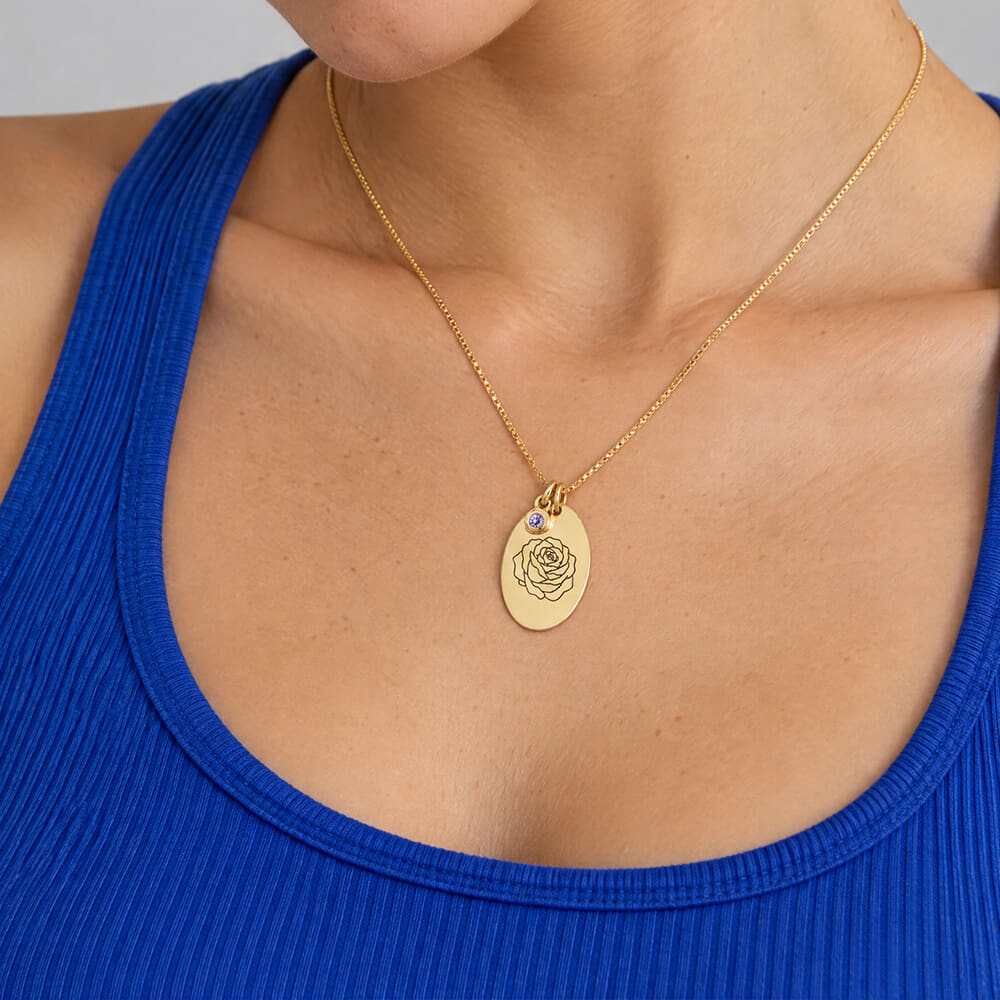
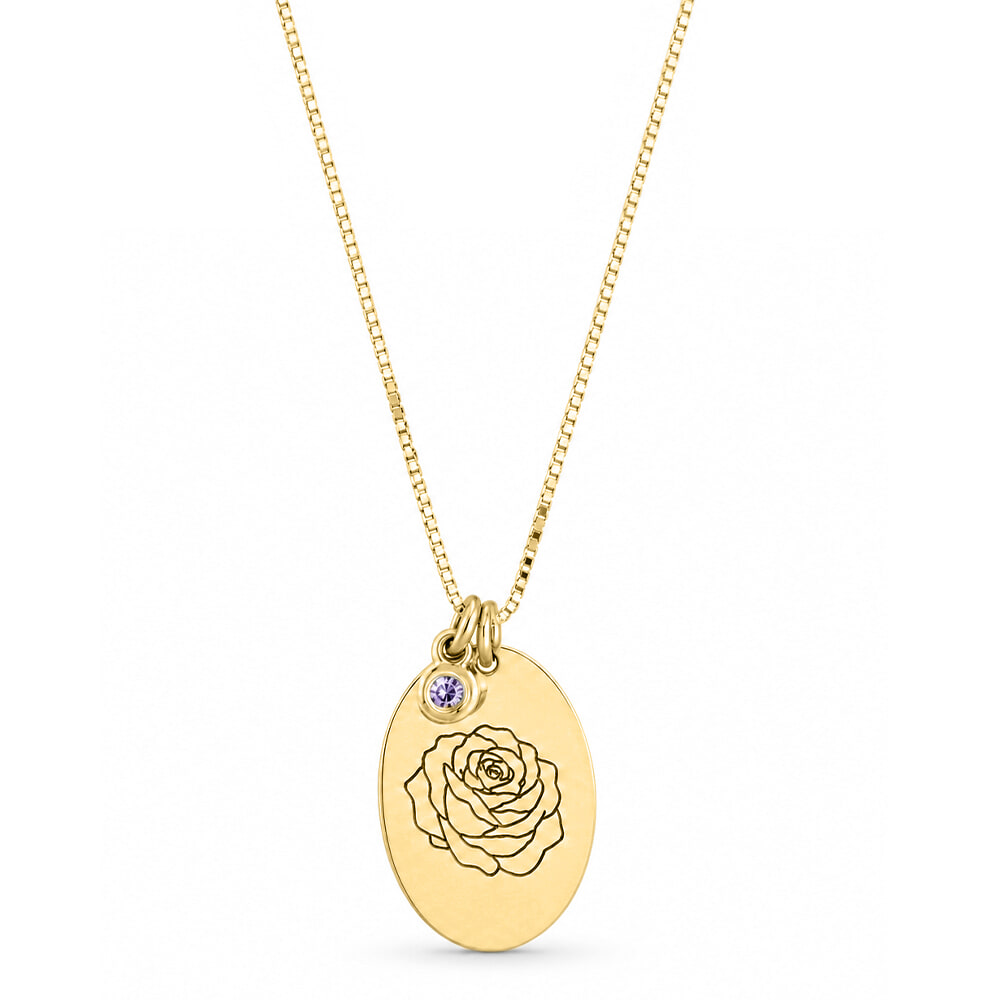
The Personalised Birth Flower Necklace with Birthstone has an oval pendant engraved with the birth month flower and a matching birthstone charm. Choose any month, in sterling silver, 24K gold plated or rose gold. It is the most complete way to celebrate a birth month in a single piece.

The Birth Flower Necklace keeps it simple and lets her birth flower stand on its own. Feminine and easy to wear every day, it is one of our most popular birthday gifts for her.
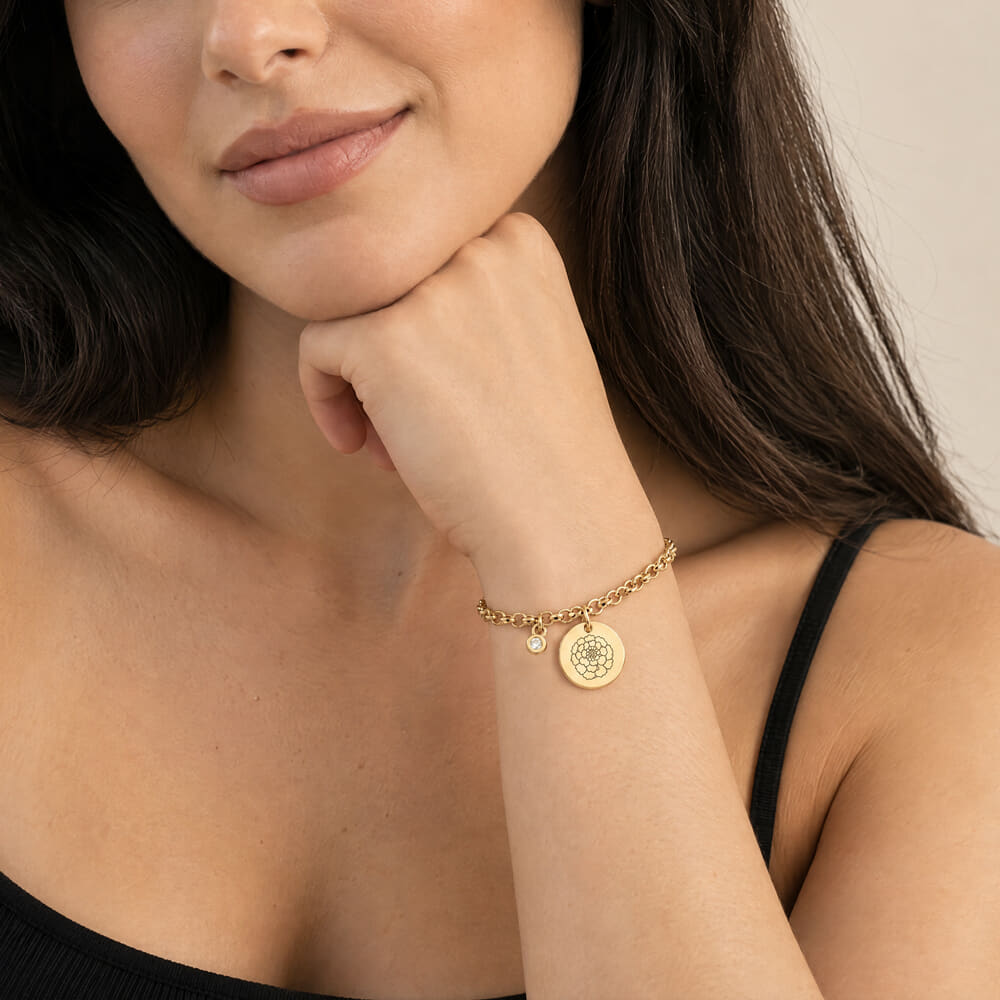
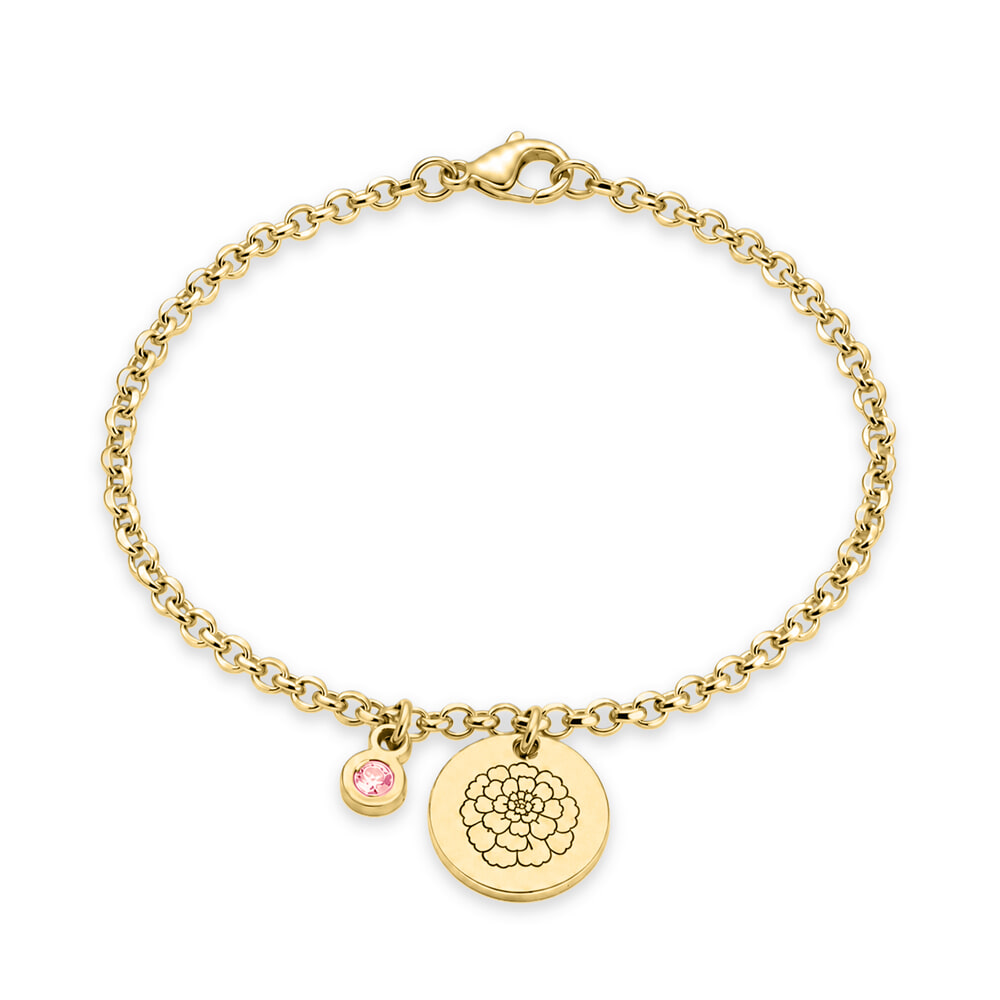
The Personalised Birth Flower & Birthstone Bracelet pairs her birth month flower with its matching birthstone on a delicate bracelet. It sits nicely next to a watch or other bracelets and makes a thoughtful gift for any birthday.
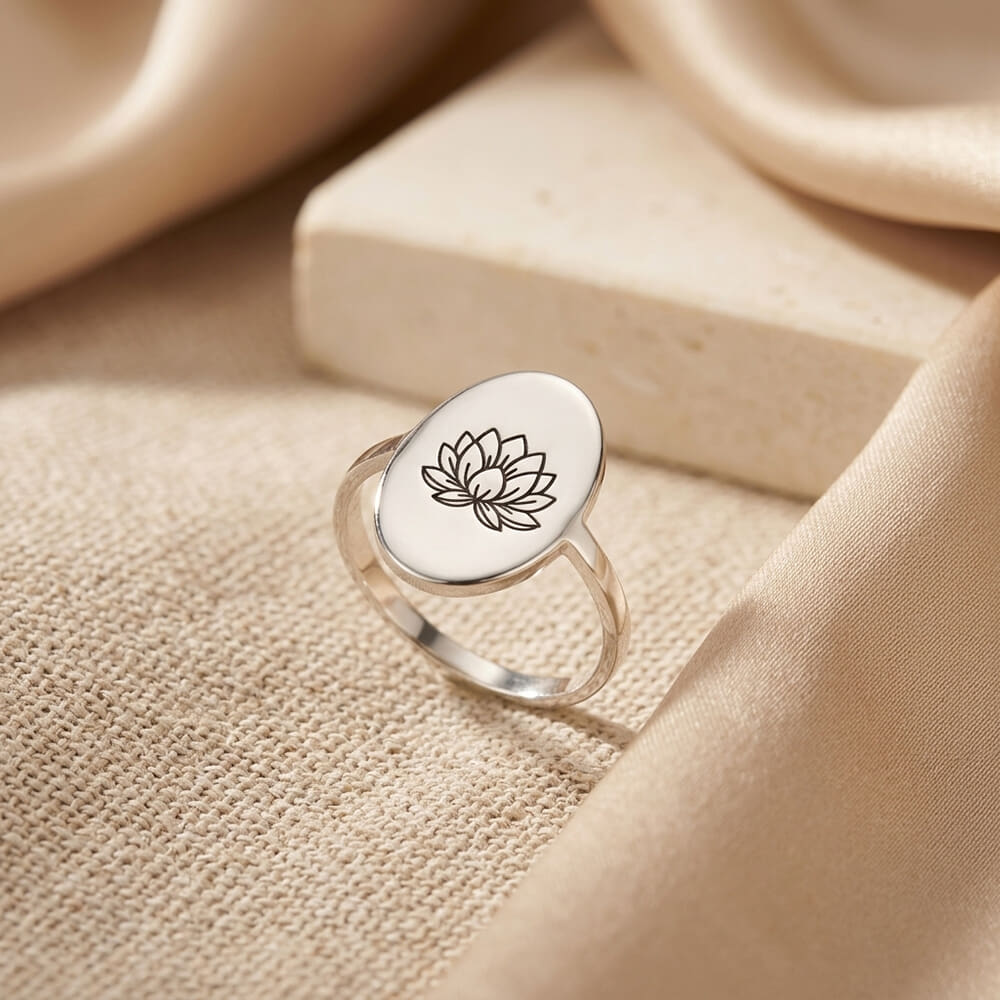
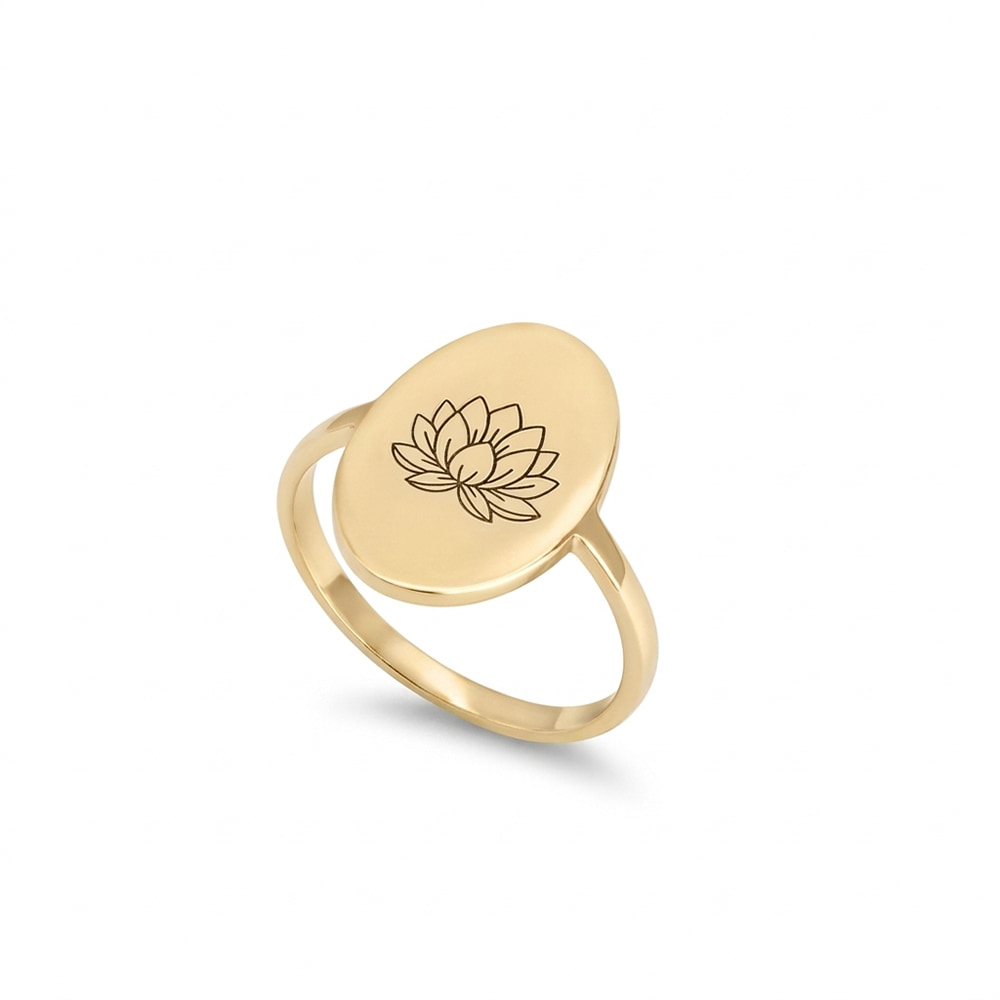
Prefer a ring? The Engraved Birth Flower Oval Ring carries an engraved birth flower on a vintage-style oval face. Choose from all 12 month flowers and your ring size, in sterling silver, 24K gold plated or rose gold.
Find Your Birth Flower
Birth flowers are a simple, personal way to celebrate someone. From the cheerful daffodil to the festive holly, each bloom carries a meaning that can say more than a card ever could. Once you know your flower, or the flowers of the people you love, it is easy to turn them into a gift that lasts.
Have a Question?
What is my birth flower?
It depends on your birth month, and each month has two: January (carnation and snowdrop), February (violet and primrose), March (daffodil and jonquil), April (daisy and sweet pea), May (lily of the valley and hawthorn), June (rose and honeysuckle), July (larkspur and water lily), August (gladiolus and poppy), September (aster and morning glory), October (marigold and cosmos), November (chrysanthemum and peony) and December (narcissus and holly).
Why does each month have two birth flowers?
Birth flower lists grew out of different European and North American traditions. Over time a second flower was added to most months, often because the first one does not bloom everywhere at the same time of year. Most guides now list two flowers per month, 24 in total.
Are birth flowers different in Australia?
No. Australians use the same traditional list. Because the seasons are reversed, some flowers bloom here at a different time of year than their birth month, but each month keeps the same two flowers and meanings.
What is the November birth flower?
November has the chrysanthemum and the peony. The chrysanthemum stands for joy, friendship and long life, and in Australia it is also the traditional Mother's Day flower. The peony symbolises good fortune and a happy life.
What is the difference between a birth flower and a birthstone?
Both are linked to your birth month. A birth flower is a bloom with a symbolic meaning, while a birthstone is a gemstone, such as garnet for January or sapphire for September. Many people combine the two in one personalised gift.
Can I wear my birth flower as jewellery?
Yes. A birth flower necklace, bracelet or ring lets you keep your flower with you every day, and it can be personalised with a name, initial or date to make a thoughtful birthday or Mother's Day gift.

Keep exploring


